

Our journal is a collection of 50+ years of experiences and wisdom from our community. We welcome positive, insightful feedback, input and if you want to become a Guest Goddess to write your own post please visit the link in the menu.
CATEGORIES
- ADVOCACY
- AMERICA'S FAVORITE PET
- ANIMAL WELFARE
- ANIMALS
- ANXIETY
- BEHAVIOR
- COMMUNITY
- CONTEST
- Collaborative Living
- Community & Reciprocity
- Consciousness & Collective Evolution
- DOG BREEDS
- DOGS
- EVENTS
- Embodiment & Awareness
- FIELD NOTES
- HEALTH AND WELLNESS
- HOLIDAYS
- Human + Animal Connection
- Human Ecology
- Interconnectedness
- LIFESTYLE
- MODERN DOG
- NUTRITION
- Nervous System & Modern Life
- Purpose-Driven Living
- RECIPES
- SERVICE DOG
- SOMATIC
- SPIRITUALITY
- Spirituality in Everyday Reality
- TRAINING
- The Dog Goddess Journal
- Transition & Transformation
- WOLVES
CONTENT
- ADAPTOGENS
- ADOPT DON'T SHOP
- ADVOCACY
- ALIGNED COMMUNITY
- AMERICA'S FAVORITE PET
- AMERICAN ESKIMO DOG
- ANCESTORS
- ANIMAL COMMUNICATION
- ANIMAL WELFARE
- ANIMALS
- ANXIETY
- AUSTRALIAN SHEPHERD DOG
- AUTHENTIC LIVING
- BEHAVIOUR
- BEST FRIEND
- BONDING
- BREEDS OF DOGS
- CAMPING
- CANINE
- CANINE ANATOMY
- CANINE CPR
- CANINE DNA
- CANINE FIRST AID
- CANINE HEALTH
- CANINE HEALTH TESTS
- CANINE NERVOUS SYSTEM
- CANINE NUTRITION
- CHAKRAS
- COLLABORATION
- COLLARS
- COLLECTIVE CONSCIOUSNESS
- COMMUNICATION
- COMMUNITY
- CONSCIOUS COMMUNITY
- CONSCIOUS LIVING
- CONTEST
- COYOTES
- CRATE TRAINING
- CULTURES
- DISABLED COMMUNITY
- DOG AGE
- DOG BREEDS
- DOG SITTING
- DOG TREATS
- DOG WALKING
- DOG WHISPERER
- DOGS
- DOLPHINS
- DREAMS
- DUIL
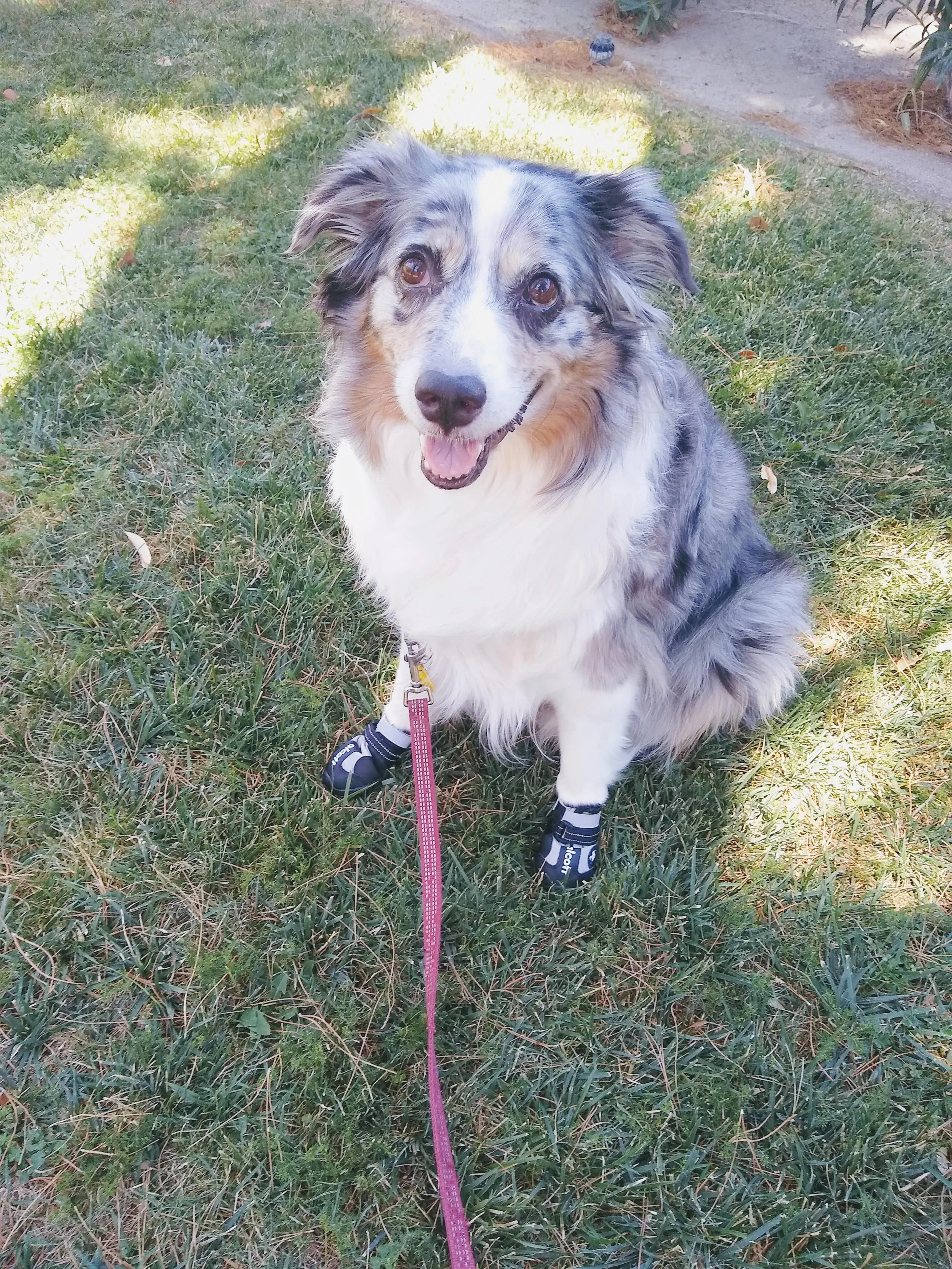
Paw Care And Paw Protection
Australian Shepherd Dog Wearing Protective Dog Boots Is An Excellent Example Of Good Paw Care and Paw Protection

Well, it’s Summer now, and for some parts of the country you may be thinking about preparing for Heat, Sun and Warmer temperatures, and in other Southernmost exposures you may still be dealing with Cold. Either way, we would like to talk to you about the importance of How To Protect your Dog’s Paws in both Hot or Cold temperatures.

Actual Example of What Can Happen To Your Dog’s Paw Pads If Unprotected In Too Hot or Too Cold of Temperatures
Many of you know, and some of you do not know, that a mere 10 seconds of a dog putting a paw to the ground; albeit frozen ground or overheated ground, is equivalent to us humans placing the palm of our hand or bottom of our foot on that same ground. Meaning of course, that if it feels way too Hot or way too Cold for you, it is going to feel the exact same to your precious pooch. Yes, this is indeed enough to cause tissue damage. So what do we recommend? Getting your dog measured for a non-decorative, functional type of boot/paw protector from numerous reputable companies such as Ruffwear brand Bark n’ Boots, Hi-Paw, Ultra Paws, Muttluks, Alcott , and many other reputable brands out there.

*Use the boots for protection; not just against the harsh cold or hot temperatures, but also for paw protection from dangerous and potentially toxic chemicals such as mag chloride, salt, pesticides, herbicides, fungicides, burs, thorns, foxtails, and of course mud. You can use the boots on your regular daily walks and on your hikes and adventures you and your dogs go on together!
If you cannot find a reputable company with a size of boot that fits your pooch, we are actually working on prototypes for own boots, and we would recommend and advocate the use of a product by the name of ‘Musher’s Secret’. This is a product for cold weather. We do not advocate its use in extreme heat.
It coats and protects your pet’s paw pads. Just make sure to apply between the toes and to the dewclaws as well. * Many owners of sled dog racing teams use it on their teams of Alaskan Malamutes and Siberian Huskies to race in such races as the famous Iditarod. * So this product comes highly recommended from someone who knows firsthand. This wax can also be used on the paw pads of your cat, hooves of your horses, and even the claws of your chickens. * If you are interested in this product, then by all means please [CONTACT US here at https://www.thedoggoddess.com/nominate and we will see about ordering the product for you or putting you in contact of a distributor in your area if you cannot locate it in your area.
*Cold weather or Warm, stay safe out there and of course keep your dogs away from any ‘interesting’ smells such as antifreeze; which has an attractive, sweet smell and of course is deadly if ingested. And please use common sense when out adventuring with your dog and take things like their age, size, health as well as the ‘surface’ they are playing or adventuring on/in into consideration. Surfaces like astroturf, artificial grass, tennis courts have the potential to damage or rip the surface of their paw pads right off.
Of course it makes sense that asphalt due to its chemical make up of gravel and tar and being black in color would attract and retain Heat faster and for a longer duration so you’re really going to have to be Conscious of this while out with your pup. For example, we took our pup to a nearby beachwalk the other day on a very cool, partly cloudy day and found that even in under 65 degrees Fahrenheit, walking on the partially paved asphalt surface for a very short duration ( under 5 minutes) to get from the underground parking lot to the shops proved too hot for both our feet, and her paws so we had to defer the walk by picking her up and going an alternate way in order to get to the cement and grassy areas again. One can only Imagine how HOT this would be if it were any higher in temperature.
Stay tuned for our articles: HIKING YOUR DOG,AND CAMPING WITH YOUR DOG.

Blueberry Banana Dog Biscuits
Blueberry Banana Dog Biscuit Recipe


Mix together:
3 cups Almond Flour,
1 Cup Wild Organic Blueberries* We like Wyman’s or Trader Joe’s Frozen
2 Mashed Organic Medium to Large size Bananas
2 Organic Free Range Eggs
and 2/3 Cup of nut butter. * We like Almond or Organic Peanut only Peanut butter
Roll dough until flat.
Cut into Shapes or Roll into balls and flatten with a fork in a crisscross pattern
* Like you would do when making Peanut Butter cookies
LAY THESE OUT ON A RECTANGULAR NON-STICK COOKIE SHEET LINED WITH PARCHMENT PAPER.
Bake at 350 degrees for 20-30 min.
ALLOW TO COOL. SERVE.
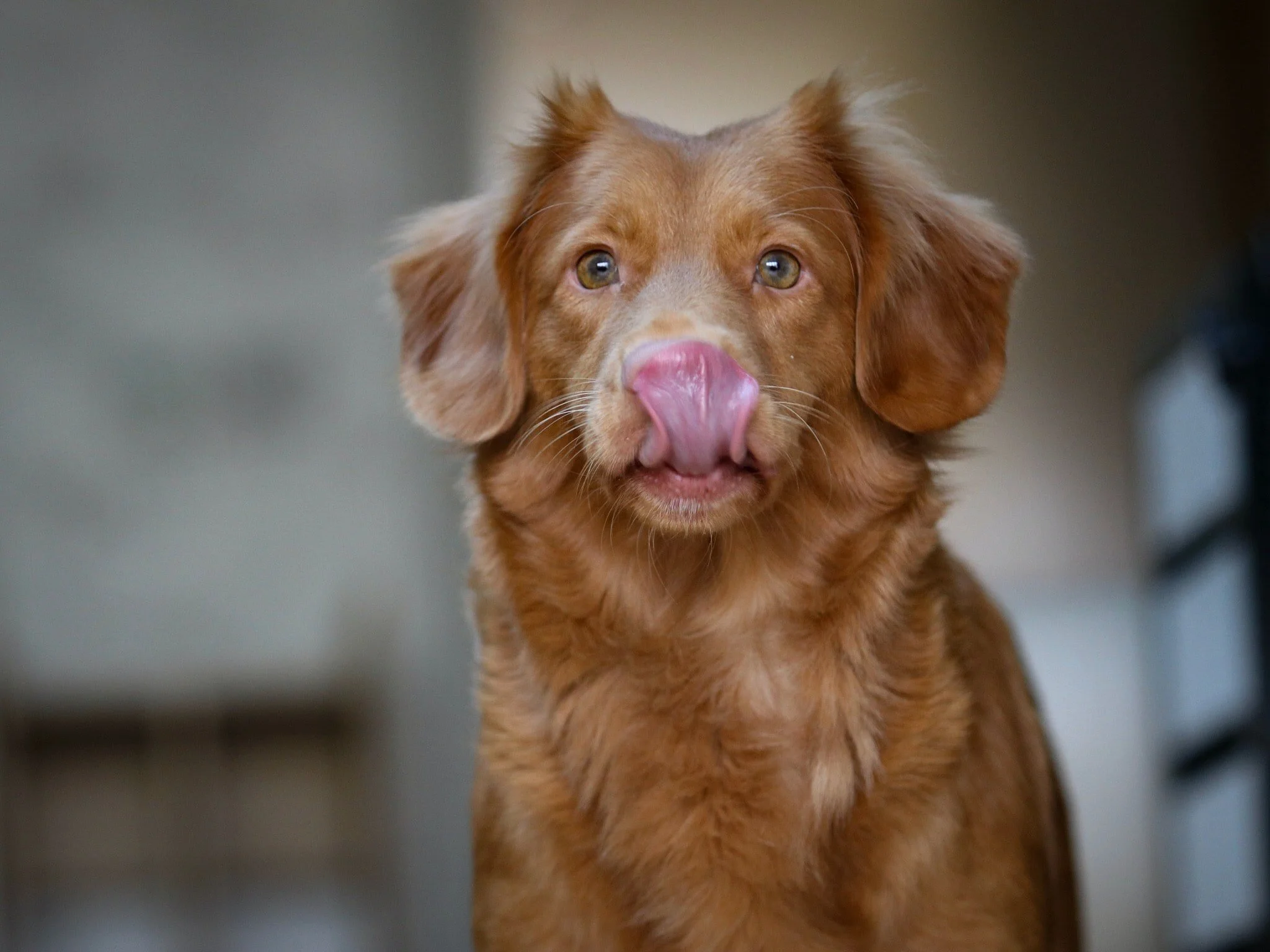
Your pup will love these!

The Dangers of Foxtails: Protecting Dogs from this Invisible Threat
FOXTAIL GRASS
THE DANGERS OF FOXTAILS- PROTECTING YOUR DOG FROM THIS INVISIBLE THREAT
WILD BARLEY GRASS
SPEAR GRASS

Foxtail grass, scientifically known as Hordeum jubatum, is a common type of grass found in many regions across the world. While it may appear harmless, be aware that foxtails can pose significant dangers to our beloved furry friends, particularly dogs. The barbed seed heads of foxtails can cause serious health issues when they come into contact with a dog's fur, skin, eyes, ears, or even internal organs.
We just noticed an entire front yard of foxtail grass and one entire side of the sidewalk covered with it on a recent walk through our neighborhood and thought this would be an informative and interesting article to share with you since you will most likely see Foxtail grasses during Spring, Summer, and Fall. Some people have commented that they look like a type of wild cousin plant to native Wheat.
Understanding the different types of foxtails, their dangers, and the necessary preventive measures is crucial for responsible dog owners and pet care givers.
This extensive article aims to provide detailed insights into foxtails, their risks to dogs, signs of infection, and appropriate treatment methods.
Types of Foxtails:
Wild Barley (Hordeum murinum): This type of foxtail grass is prevalent in many regions, featuring long seed heads with sharp awns. Wild barley is commonly found in open fields, meadows, and undisturbed areas.
Foxtail Hordeum (Hordeum jubatum): This particular foxtail species has distinctive, bushy seed heads resembling a fox's tail, which gives it its common name. Foxtail Hordeum is typically found in grassy areas, roadsides, unmowed, unmanicured lawns in neighborhoods and fields, and disturbed habitats.
Spear Grass (Austrostipa spp.): Spear grass possesses long, slender seed heads with sharp, needle-like awns that can easily penetrate a dog's skin or mucous membranes. Spear grass is commonly found in dry or arid regions, grasslands, and open spaces.
Dangers of Foxtails to Dogs:
External Injuries: Foxtails can burrow into a dog's fur, ears, eyes, nose, or paw pads. Their barbed seed heads allow them to move in only one direction, making it difficult for dogs to remove them naturally. This can result in painful abscesses, infections, or even more severe complications if left untreated.
Internal Injuries: If/When a dog ingests foxtails, they can travel through the digestive system and potentially cause blockages or puncture the gastrointestinal tract. These internal injuries require immediate veterinary attention and can be life-threatening if not treated promptly.
Respiratory Issues: Inhaled foxtails can cause respiratory distress, leading to coughing, sneezing, and difficulty breathing. If a foxtail lodges deep in the respiratory system, it may require specialized medical intervention.
Preventive Measures:
Prevention is the best defense against foxtail-related issues.
*Here are some tips to keep your dog safe:
Regular Grooming: Brush your dog's coat frequently, paying particular attention to the ears, paws, and other areas prone to foxtail entanglement.
*Avoid High-Risk Areas: Be cautious in environments where foxtails are prevalent, such as open fields, hiking trails, or overgrown grassy areas.
Protective Gear: Consider using protective clothing and/ or protective boots designed for dogs during outdoor activities.
Inspection: After each outdoor excursion, thoroughly check your dog's coat, ears, eyes, nose, and paws for any signs of foxtails. * This is something you should be doing regularly anyway after ANY daily outdoor activities with your pup.
Landscaping: If you are a home owner or you have a gardening/landscaping service professional come to your property, Regularly remove foxtails and other hazardous plants from your yard to reduce the risk of exposure.
Recognizing Foxtail Infections: It is crucial for dog owners to be vigilant and watch for signs of foxtail infections, which can vary depending on the affected area.
*Some common indicators include:
Persistent licking, scratching, or pawing at a specific body part.
Swelling, redness, or discharge in the affected area.
Sneezing, coughing, or difficulty breathing.
Head shaking or tilting, indicating an ear infection.
Lameness or reluctance to put weight on a limb.
Treating Foxtail Infections: If you suspect your dog has come into contact with foxtails or is showing signs of infection, it is crucial to seek veterinary care promptly.
Treatment methods may include:
Physical Examination: A thorough examination helps locate and remove any visible foxtails from the dog's coat, ears, eyes, nose, or other affected areas.
Imaging Techniques: In some cases, X-rays or other imaging techniques may be necessary to locate foxtails that have migrated internally.
Antibiotics: If an infection has occurred, your veterinarian may prescribe antibiotics to prevent or combat any bacterial complications.
Surgical Intervention: In more severe cases, surgery may be required to remove deeply embedded or internal foxtails.
As you now know, Foxtails pose a significant threat to dogs, and responsible pet owners must be aware of the potential dangers they present. By understanding the various types of foxtails, recognizing the signs of infection, and taking preventive measures, we can help safeguard our canine companions from this invisible threat. If you suspect your dog has encountered foxtails or is showing signs of infection, immediate veterinary attention is vital to ensure prompt and appropriate treatment, reducing the risk of complications and promoting a speedy recovery.
Don’t discount this fluffy-looking plant any longer. Now you know they are not as innocent as they may look interns of what types of damage they can do to your pup.

Best Ways To Help Transition Your Dog To A New Food
Blue Merle Australian Shepherd Dog Looking In To Dog Food Bowl At Home Made Nutritious Dog Food
BEST WAYS TO HELP TRANSITION YOUR DOG TO A NEW FOOD

Lately we have had several questions from pet guardians wishing to know the best ways to help transition their beloved doggies to a healthier diet.
Here are some helpful ways to start and make the transition easier for both your pet and for you.
The first bit of advice we will offer is to do this gradually.
By gradually, we mean plan to do this over at ‘least a two week time period ‘ in order to give your dog’s taste buds and digestive system time to acclimate.
You should stick with the food she is currently eating as the basis of her diet, and slowly phase in bits of the new food, until finally when you reach the end of the two week time frame, your pup is eating only the new food and doing well.
In this example, we’re going to use the word ‘kibble’- (We are not advocating, nor dis-advocating kibble)
Let’s Say your pup eats 2 cups of premium kibble per day; ideally split between the morning meal and her evening meal. * Remember, we shared with you that dogs are creatures of habit, so try to keep their mealtimes around the same time each day.
You will want to start the transition by leaving out a quarter cup of her current food, and mixing in a quarter cup of her new food over the first few days, and if she is doing well and not experiencing issues like vomiting, diarrhea, bloating, excessive itching, things along those lines, then Continue to phase in a 1/4 (quarter) Cup of her new food while simultaneously phasing out a quarter cup of her current food, until Finally at two weeks time you are feeding her only her new food and she is doing well.
Remembering that unlike humans, dogs have very short digestive tracts, so they are very sensitive to anything new. Some of the higher evolved breeds like the herding breeds are well known to being Highly Sensitive in pretty much every good sense of the word; including their digestive systems. Those old ‘limited beliefs’ that dogs can eat pretty much any and everything and be healthy are not true. You are doing your best to ensure that YOU eat the most highly nutritious foods available to you so that you will function at your optimum BEST and you will want to do the same for your puppy/dog family member.
The key is to take things slow, make sure your pup is doing well with their transition, and as always, if you have any questions and wish further advice feel free to [Contact Us], here for a more in depth consultation.
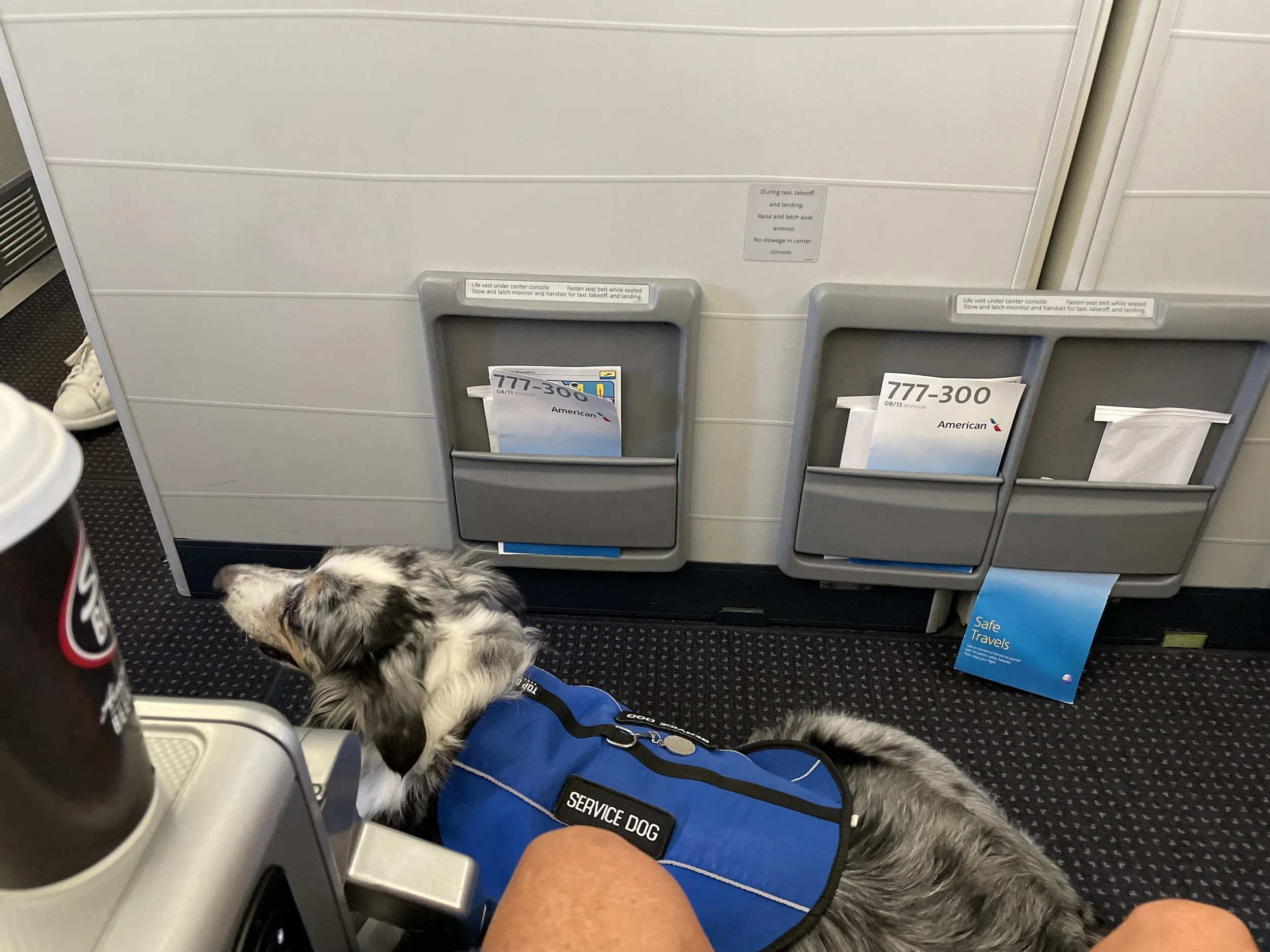
THE EXTRAORDINARY SUPPORT OF SERVICE DOGS: TRAINING, REGULATIONS, AND DISTINCTIONS FROM GUIDE DOGS
BLUE MERLE AUSTRALIAN SHEPHERD SERVICE DOG
SERVICE DOG IN CABIN AT HANDLER’S FEET ON AIRLINE FLIGHT
Australian Shepherd Service Dog In Cabin At Handler’s Feet On Airline Flight
Service dogs are remarkable companions that provide invaluable assistance to individuals with various disabilities, both visible and invisible, as well as offering support beyond visual impairments. These highly trained canines offer physical assistance, emotional support, and even life-saving interventions.
As we explore the world of service dogs, we will be shedding light on their training process, the responsibilities of their handlers, and the laws and regulations governing their access to public spaces. Furthermore, we will distinguish between service dogs and guide dogs, highlighting their unique roles and areas of assistance.
The Essential Role of Service Dogs: Service dogs are trained to assist individuals with disabilities, such as physical impairments, hearing loss, diabetes, lupus, heart conditions, epilepsy, post-traumatic stress disorder (PTSD), and many others. These remarkable animals are meticulously trained to perform specific tasks that help mitigate their handlers' disabilities and improve their quality of life.
The Training Process: The training of service dogs is a rigorous and comprehensive process that varies depending on the type of disability they are meant to assist with. Training organizations employ professional trainers who carefully select suitable puppies or adult dogs with the necessary temperament, intelligence, and physical capabilities for service work. If you are a highly qualified trainer and or have extensive experience with animal behavior you may train your own service dog to assist with and perform the tasks necessary to help you with your disabilities. There are no laws stating that you MUST hire a Professional trainer if in fact YOU are a professional trainer.
The training process typically includes obedience training, specialized tasks related to the handler's disability, and public access skills. Service dogs may be trained to open doors, retrieve dropped items, alert their handlers to sounds or approaching seizures, provide stability and balance, or perform a multitude of other tasks based on individual needs. * The service dog needs to be able to assist with two or more of the disabled person’s needs. An example might be that a person is hearing impaired and also has balance issues, so their Service Dog would need to be able to assist them with hearing and balance.
The Bond between Handler and Service Dog: The relationship between a service dog and her/his handler is built on love, trust, interdependency, and partnership. Handlers rely on their Service Dogs to mitigate their disabilities, provide emotional support, and assist in their daily activities. The bond formed between a handler and their service dog is characterized by clear, almost telepathic communication, empathy, and a deep understanding of each other's needs.
Public Access Rights: Service dogs are granted specific legal rights and protections to accompany their handlers in public places. These rights, often enshrined in laws such as the Americans with Disabilities Act (ADA) in the United States, ensure that individuals with disabilities can access public spaces, including restaurants, stores, schools, transportation, and other establishments with their Service Dogs and that they will NOT be singled out or Discriminated against for having chosen to have a Service Dog accompany them, rather than to use an inanimate object such as a wheelchair, walker, or cane to assist them. Having a Service Dog is the disabled person’s choice, and as such they and their Service Dog must be acknowledged and respected for utilizing that choice.
Rules and Regulations for Service Dogs:

Service Dog Assisting Handler While Out Shopping
While Service Dogs are generally welcome in public areas, there are regulations and guidelines that handlers must follow to ensure a harmonious and respectful experience for all. Handlers are responsible for the care, behavior, and cleanliness of their service dogs, ensuring that they are not a threat or nuisance to others.
Something we cannot Stress enough is how important it is to recognize that Service Dogs are not considered as ‘pets’, but rather working animals, and as such, they are granted special privileges to accompany their handlers in areas where pets may be restricted. Handlers must also respect the rights of business owners to address any disruptive or ill-behaved service dogs.
A valid and important point we feel compelled to speak out on is that Although in over 5 decades we have Never witnessed a disruptive or ill-behaved Service Dog, we most definitely HAVE witnessed disruptive and ill-behaved, humans behaving in rude, discriminatory manner towards the disabled and toward their service dog. We have also witnessed on an almost weekly basis ‘FAKE’ Service Dogs and ‘Fake’ Disabled persons. By Fake, we mean that we regularly see people attempting to masquerade their Untrained pet dogs as authentic Service Dogs, just by purchasing Vests or Patches Identifying their family ‘PETS’ as Service Dogs. This is not only completely disrespectful, entitled behavior on the part of these people, but it could and often does put their untrained family Pet Dogs in a precarious or dangerous position. In fact, on one particular occasion, one of our disabled friends and her highly trained Service Dog were out shopping in a clothing store when all of a sudden an Untrained, Aggressive Chihuahua wearing a Fake Service vest escaped her owners grasp and came running underneath the clothing racks, dragging its leash attempting to attack the disabled person’s Service Dog who was calmly sitting by her feet as she browsed through the clothing racks. The staff in the store were completely unprepared as to what to do, how to handle the situation, and the disabled woman and her Service dog were now shaking, startled and not feeling at all comfortable with the shopping experience. The woman who was supposed to be in control of her Chihuahua was yelling and screaming obscenities at her dog while trying to catch it.
No authentic ‘Service’ Dog would ever exhibit such bad behavior because all Service Dogs have to be thoroughly trained in Obedience first of all, and second of all they will have gone through 12-36 months ( 1-3 YEARS) of additional specialized service work PRIOR to being able to be designated as a Working Service Dog.
When you are a disabled person and or you are a trainer/handler of a true authentic Service Dog, and you know how much hard work, long intensive hours of training and incredible financial expense it takes in order to share your life with a trained Service Dog who can meet the tasks necessary to help that disabled person, you can EASILY Recognize ‘fake’ Service Dogs in their Fake Vests, and to the trained eye the body language of the so-called disabled person/handler easily stand out as well. Yes, we understand that if you are the manufacturer/retailer of the Service Dog or Guide Dog vests and patches that you need to be able to showcase and sell your products, but unless you have no scruples you’re most likely assuming that the people purchasing them actually NEED them in order to Help Identify their Dogs as either Service Dogs or Guide Dogs, right? You’re probably not thinking that everyday folks are purposefully buying your products to place on their Untrained, Unknowing family Pets just because they think it would be ‘cool’ or ‘convenient’ to take their pets places that ‘pets’ are not actually allowed. In many instances they are not allowed for either ‘their’ and or ‘your’ Safety. By the same token, if you are one of these people purposefully purchasing a Service Dog or Guide Dog vest or patches to place on your family pets, you need to think twice about your actions. Put your self in the place of the disabled person and or the Service Dog. Would you want to become disabled? Would you want to live your formerly active live with disabilities until you could find and or afford to have a Service Dog help you acclimate to your new life? Be kind and compassionate and considerate. Another thing to keep in mind is that as of this writing, there are NO laws or Regulations in place to ‘require’ that a disabled person put a Vest, Collar or Harness with Service Dog patches on their Service Dog. In fact, it has been our experience in working with both disabled people as well as Service Dogs and Guide Dogs for several decades, that MOST disabled people only do this courteous gesture to the general public and give them sort of ‘heads up’ to respect the dog and the handler as a working service team with rights. They do this as a ‘Means to Easily Identify their Dog as a Service Dog’ and differentiate that dog from a ‘pet’ dog to the general public. When you think logically about this, it makes perfect sense because disabled people are ‘choosing’ to utilize the help of a living, loving, breathing, sentient being; their Service Dog to help assist them with their daily lives Rather than to use ‘inanimate’ objects as we mentioned before like wheelchairs, walkers, canes, and such. Had they NOT chosen a Service Dog to help them, would it be logical if they ‘identified’ themselves as being disabled? For example if they put on a Vest or Wore some sort of ‘tag’ proclaiming their disabilities? Of course not. The General public ‘assumes’ when they visually witness people using wheelchairs, canes, walkers and other ‘assistive’ devices that they ‘must’ have some sort of disabilities. Conversely, when the general public sees people with Dogs, they don’t even remotely ‘assume’ that the dog ‘IS’ the actual ‘Assistive’; in this case a ‘Service Dog.’
Key Differences and Similarities with Guide Dogs: Although both service dogs and guide dogs provide assistance to individuals with disabilities, there are significant differences in their roles and areas of focus. While Guide Dogs primarily assist individuals with visual impairments in navigating their surroundings safely, Service Dogs are trained for both specific and a broader range of disabilities and tasks.
Guide Dogs undergo specialized training to navigate obstacles, follow specific routes, and provide mobility assistance to visually impaired people. In contrast, Service Dogs receive training tailored to the specific needs of their handlers, which may include a multitude of tasks like retrieving medication, alerting to allergens, or providing balance support.
Service Dogs are exceptional animals that offer immeasurable support to individuals with disabilities, addressing a wide range of needs beyond visual impairments. The intensive training, legal rights, and the special bond between handlers and service dogs enable individuals to overcome physical and emotional challenges, enhancing their independence and quality of life. Understanding the regulations is key and future articles will include more on the specifics of regulations, rules, and the laws as they pertain to both Guide Dogs and Service Dogs and their owner/handlers.

WHY DO DOGS EAT GRASS?
WHY DO SOME DOGS EAT GRASS?
SHETLAND SHEEPDOG EATING GRASS.

Dogs may eat grass for a variety of reasons.
Some possible explanations include:
Digestive issues: Dogs may eat grass to induce vomiting or to aid in digestion if they are experiencing an upset stomach or constipation.
Nutritional deficiencies: Dogs may eat grass if they are not getting enough fiber or other nutrients in their diet.
Behavioral reasons: Some dogs may simply enjoy the taste or texture of grass, or they may have developed a habit of eating it.
Boredom or anxiety: Dogs that are bored or anxious may chew on grass as a way to relieve stress or occupy themselves.
While it is generally not harmful for dogs to eat small amounts of grass, excessive consumption can lead to vomiting or diarrhea. If your dog is eating grass frequently or exhibiting other signs of illness, it is best to consult with a veterinarian to rule out any underlying health issues.
Firstly, if a dog is experiencing digestive issues such as an upset stomach or constipation, they may turn to eating grass as a way to alleviate their discomfort. Grass can help induce vomiting, which can help a dog expel any harmful substances or irritants that may be in their stomach. Additionally, the fiber in grass can help move things along in the digestive system, which can be helpful for dogs that are constipated.
Secondly, dogs may eat grass if they are not getting enough fiber or other nutrients in their diet. Grass contains fiber, which is an important nutrient for maintaining a healthy digestive system. If a dog's diet is lacking in fiber, they may seek it out in the form of grass. However, it's important to note that grass is not a complete source of nutrition and should not be relied upon as a sole source of fiber or other nutrients.
Thirdly, some dogs may simply enjoy the taste or texture of grass, or they may have developed a habit of eating it. Dogs are curious animals, and they may explore their surroundings by putting things in their mouth. If a dog discovers that they like the taste or texture of grass, they may continue to eat it even if they don't necessarily need it for digestive or nutritional purposes.
Finally, dogs that are bored or anxious may chew on grass as a way to relieve stress or occupy themselves. Chewing on grass can be a form of mental stimulation for dogs, and it can help them release pent-up energy or anxiety.
Overall, while it is generally not harmful for dogs to eat small amounts of grass, excessive consumption can lead to vomiting or diarrhea. As we mentioned, if you notice that your dog is eating grass frequently or exhibiting other signs of illness, it's always a good idea to consult with a veterinarian to rule out any underlying health issues.

IS IT RUDE FOR A NEIGHBOR TO ALLOW THEIR DOG WHO HAS SEVERE SEPARATION ANXIETY, TO BARK, CRY, AND HOWL INCESSANTLY WHILE THEY LEAVE the dog ALONE FOR LONG LENGTHS OF TIME?
PUPPY LEFT ALONE BY OWNER IN CRATE TO CRY AND DISTURB NEIGHBORS

Yes, it is generally considered rude for a neighbor to allow their dog to bark and howl incessantly for hours, especially if it is due to separation anxiety. Not only is it disruptive to the peace and quiet of the neighborhood, but it can also be distressing for the dog and cause unnecessary stress and anxiety.
If you feel comfortable speaking with your neighbor, you might consider politely yet firmly expressing your concerns and suggesting potential solutions. For instance, that the neighbor could try providing the dog with toys or treats to keep them occupied, or they could perhaps hire a dog walker or pet sitter to keep the dog company while they're away. These days there are SO many options that were literally not available even twenty years ago. Consider APPS like: Wag.com, Rover.com, Fetch.com, Trustedhousesitters.com, which all require background checks and screening for provided services. They could also purchase a pet/nanny cam and ‘monitor’ the dog while trying to leave home, and they would start by doing so for a few minutes at a time and ‘work up to more time’ in increments. That way, they can tell if their dog is over-anxious, cannot settle down, is crying or howling incessantly then they can return quickly. There are even Dog-Centric Cameras like FURBO that not only monitor the dog, the camera also tosses out little treats!
If speaking with your neighbor doesn't work, you might consider reaching out to your local animal control agency, because contrary to public belief, they will first most usually come out or call the dog owner who has the dog having the problems, and offer viable solutions like the ones mentioned, as well as offer resources to dog training and with an emphasis on behavioral issues like separation anxiety, dogs that have come from traumatic situations like shelters, puppy mills, etc. If the problem continues and the dog is still in a state of distress and the owner/neighbor is absent and or non-responsive, then you may have no other recourse than to contact your local law enforcement for assistance. *Most people don’t want to do this first, if at all because many are pet parents/pet owners themselves and they are ‘genuinely’ concerned for the welfare of the dog in distress, but they DO want the dog’s owner to get help for the dog, and simultaneously they want their neighborhood to get back to and to remain in a state of relative peace and quiet.
If you've talked with your neighbor cordially and suggested the above things and all they have to say is: It will just take time for my dog to quit barking while being left alone, then what do you do?
If you have already spoken with your neighbor and suggested potential solutions, and they are not willing to take positive action steps to address the barking and howling, you and or a group of concerned neighbors may need to peacefully escalate the situation. Here are some steps you could take:

Check local noise ordinances: First, check your local noise ordinances to see if the barking is violating any laws. If it is, you may be able to file a noise complaint with your local authorities. Most if not all of these places will tell you that it is in fact inhumane, as well as a violation of the law to leave a dog barking, howling, crying, baying for longer than 5 minutes within any hour long time frame. Unfortunately, even though many cities are well funded, Noise Ordinance and or Animal Control Departments seem to be some of the MOST Understaffed. Many will tell you that even in a huge geographic area where the County may be one of the Largest counties in the State or Province, they only have 3-6 ‘dedicated’ employees in that department to handle such a HUGE area. Don’t despair, try to call in ‘as SOON as’ you hear the dog in distress because most of these departments also do NOT even ‘dispatch’ the officers to the call until sometimes an Hour or more PAST the time they receive your call because they are busy with Internal as well as External issues involving Noise and or Animal Noise/Control complaints/issues.
Document the barking: We realize that this is an incredible inconvenience and takes up alot of your time and energy that you would normally utilize to live your own life peacefully and as a good neighbor, but it may be helpful from a legal standpoint for you to keep a log of the times and duration of the barking and howling, as well as any other relevant details such as whether the dog is left outside or inside, and whether the owner is home or not. You could also record video and audio of the barking, baying, howling dog(s) IF you have the time and technical skills to do so, but keep in mind that you need to do so away from the barking dog’s/negligent neighbor’s property or they may try to ‘gaslight’ the situation and insinuate that you neighbors are trying to get their dog(s) to bark, when in fact it is actually simply a person who doesn’t care if their dog is in distress OR if their Neighborhood and their more peaceful neighbor’s own pets, kids, are now upset by all the incessant barking with no reprimand or training/intervention. Btw, since common sense dictates that dogs are pack animals, and it is instinctive for them to want to find our why the other dog(s) are barking in distress AND why No humans are going to their aid. Even the smartest dogs simply do NOT understand WHY no one would help a fellow canine; especially when ‘they view us humans as the leaders up their packs and look up to us.’
Consider mediation: If you have a homeowners association or community mediation program, or a landlord, consider contacting them to see if/how they can help mediate the situation between you and your neighbor.
Seek legal action: If the barking continues and is causing a significant disruption to your quality of life, you may need to consider seeking legal action. Consult with an attorney to see what options are available to you.
Ultimately, it is important to remember that resolving the issue may take some time, quite a bit of behavior modification and professional training for the dog(s), and for their owner/your neighbor to do consistent training with the dog(s)at home and/or send them to a professional trainer so that the neighborhood can get back to its peaceful state of being and so that the dogs receive the time and attention that they deserve in order to be better canine citizens.

Natural Insulation for Optimal Health- Do Not Shave Double Coated Dogs
SAMOYED DOG
EXAMPLE OF A COUBLE-COATED DOG
DO NOT SHAVE DOUBLE COATED DOGS
Well, its that time again, Summer, and for some reason almost Every year we share this all important information with our fellow humans to respect their dog’s nature and NOT shave these breeds of dogs that have a beautiful divinely bestowed ‘double’ coat.
Dogs are marvelous creatures with an array of fascinating characteristics. One of their most remarkable features is the double coat, which consists of a dense fluffy undercoat and a longer, protective outer layer. While some dog parents may be tempted to shave their double-coated pets during the Summer months, it is essential to understand the significance of these beautiful coats in maintaining the health and well-being of our canine companions. By the time you finish reading this article we hope that it has shed light on why it is crucial to refrain from shaving dogs with double coats, and embrace this natural insulation that was given to them for many reasons.
By Double coats, we are referring to those commonly found in breeds such as Australian Shepherds, American Eskimo Dogs, all Collies, Huskies, German Shepherds, and Golden Retrievers just to name a few. These coats are not just a matter of aesthetics. They serve a vital purpose in protecting dogs from various environmental elements, such as extreme temperatures, moisture, and even insect bites. The two layers of fur work in perfect harmony to regulate body temperature and shield the dog's internal organs from both cold and heat.

Thermal Imaging of Shaved Double Coated Dog. *Note Temperature in Internal Organ Area is over 6 Degrees Hotter, leaving Internal Organs Exposed to Faster Heat/Sun Damage.
Contrary to popular and often uneducated belief that you should shave pretty much all dogs when Summer is approaching, a double coat actually helps keep dogs cool during the warmer months. The undercoat acts as a natural barrier, insulating the skin and preventing direct exposure to the sun's rays. It also facilitates air circulation, allowing the dog's body to dissipate heat effectively. The longer guard hairs of the outer coat provide shade and offer additional protection against harmful ultraviolet (UV) radiation, reducing the risk of sunburn and overheating.
In Colder Winter months of course the primary purpose of a double coat is to protect dogs from frigid temperatures and harsh weather conditions. The undercoat acts as an excellent insulator, the same as it does in Summer, only in Winter the fluffy undercoat traps body heat close to the skin and keeps your dog warm. The air pockets within the undercoat provide an extra layer of thermal insulation, preventing cold air from reaching the skin and protecting the vital organs from potential damage. The longer outer coat repels moisture and snow, keeping the undercoat dry and maintaining the dog's comfort.
Mother Nature knows what to do and when.
Shaving a dog with a double coat can also have unintended consequences for your double coated dog’s skin health. The double coat acts as a natural barrier, shielding the skin from allergens, irritants, and potential infections. *When shaved, the skin becomes exposed and vulnerable to external factors, leading to an increased risk of sunburn, bug bites, and various skin issues. Additionally, shaving can disrupt the natural shedding cycle of the double coat, potentially leading to uneven regrowth and discomfort for the dog. You know yourself how itchy and uncomfortable you feel if you have ever shaved your arms, legs, etc. too often and or too close. *Imagine this feeling ALL over your entire body if you were to put yourself in your dog’s place had you shaved them. Plus, your dog has fur ALL over her/his body, not just under arms or on legs so it can and usually Does take several months for the fur to grow back in.
Dogs with double coats have evolved over generations to adapt to their surroundings, and their coats are a crucial part of their natural cooling mechanisms. The air pockets within the undercoat help regulate body temperature by trapping cool air during hot weather, while the outer layer prevents direct heat absorption. Shaving a double-coated dog interferes with this natural cooling process, making it more difficult for them to regulate their body temperature effectively.
So, instead of resorting to shaving, there are alternative methods to help dogs with double coats stay cool during warmer months. Regular brushing is crucial for removing loose fur and preventing matting, which can hinder proper air circulation within the coat. Providing access to shaded areas, fresh water, and air-conditioned spaces will also contribute to their comfort. Additionally, scheduling outdoor activities during cooler parts of the day and avoiding excessive exercise in extreme heat can help prevent overheating. * This tip applies to ALL dog Breeds and pretty much all species of animals and to humans as well. It is common sense. In Warmer months exercise early in the morning and around dusk. There are also products out there you can purchase to help double coated dogs stay even cooler in Summer like Ruffwear Brand’s ‘Cooling’ vests, Raised Dog Beds with Mesh surfaces to allow for even more air circulation, Cooling Mats, Bandanas With Cooling gels inside of them.
The double coat possessed by certain dog breeds *such as the Samoyed Dog you see in the main Image for this article serves a vital purpose in maintaining their overall health and well-being. Shaving these double coated dogs may appear to be a quick solution to combat heat, but as we all know, things aren’t always as they ‘appear’, and it can have detrimental effects on their natural insulation and overall skin health. Embracing and preserving the double coat is essential to ensure that our four legged friends can thrive in various weather conditions while maintaining their optimal health. By understanding the significance of these coats, we can provide our beloved companions with the care they truly deserve.
If you find that you have shaved your double coated dog before being informed of some of the things we have shared with you in this article, please know that yes, their coat will grow back, but it may take quite some time and they may experience some of the things we have mentioned above. It is up to you as a responsible pet parent ‘now that you are Aware’, to protect them while their coat grows back. We suggest that in addition to walking them at cooler times of the day and nite in Summer months and warmer times in Winter months, that you purchase a dog shirt or use one of your own t-shirts and cover their body loosely and tie up the end of the shirt on their back. This will help protect them from sun, heat, cold, dirt, the environment and you can easily take it on and off and wash it with a sensitive skin/free& clear type of laundry product. Last thing you need at this point is to wash it with a cleaning product filled with chemicals and have those become magnified in the sun and against their skin and cause more problems.
Also of note is that if you have had a groomer who shaved your double coated dog for no reason other than esthetics or supposed ‘fashion’, then you might need to consider hiring a different groomer who is more aware and conscious of not shaving double coated dogs for any other reasons than say if the dog had gotten into a mess like stickers you cannot comb out, a skin/health condition like mange, bad case of fleas, or is preparing for a surgery. That ‘lion-cut’ may look and feel good on a lion who btw lives in climates of extreme heat, but that’s precisely the point. The lion is a lion. Your dog is not, therefore the dog does not need and will not benefit from a lion cut.
These are really the only valid reasons one might have to shave a double-coated dog breed or any breed for that matter unless of course you are the owner/handler of a breed such as a Poodle and you are ‘showing’ them and may choose a special cut rather than something au natural. Btw, Poodles do NOT have a double coat and in this article that is what the subject is.
Keep your double coated dog clean, and follow the tips we have shared with you and their natural protection will serve them well and you’ll be a happier pet parent.

BATHING YOUR DOG CAN BE A RELAXING BONDING EXPERIENCE
BATHING YOUR DOG CAN BE A RELAXING BONDING EXPERIENCE
BLUE MERLE AUSTRALIAN SHEPHERD RECEIVING RELAXING BATH AT SELF DOG WASH
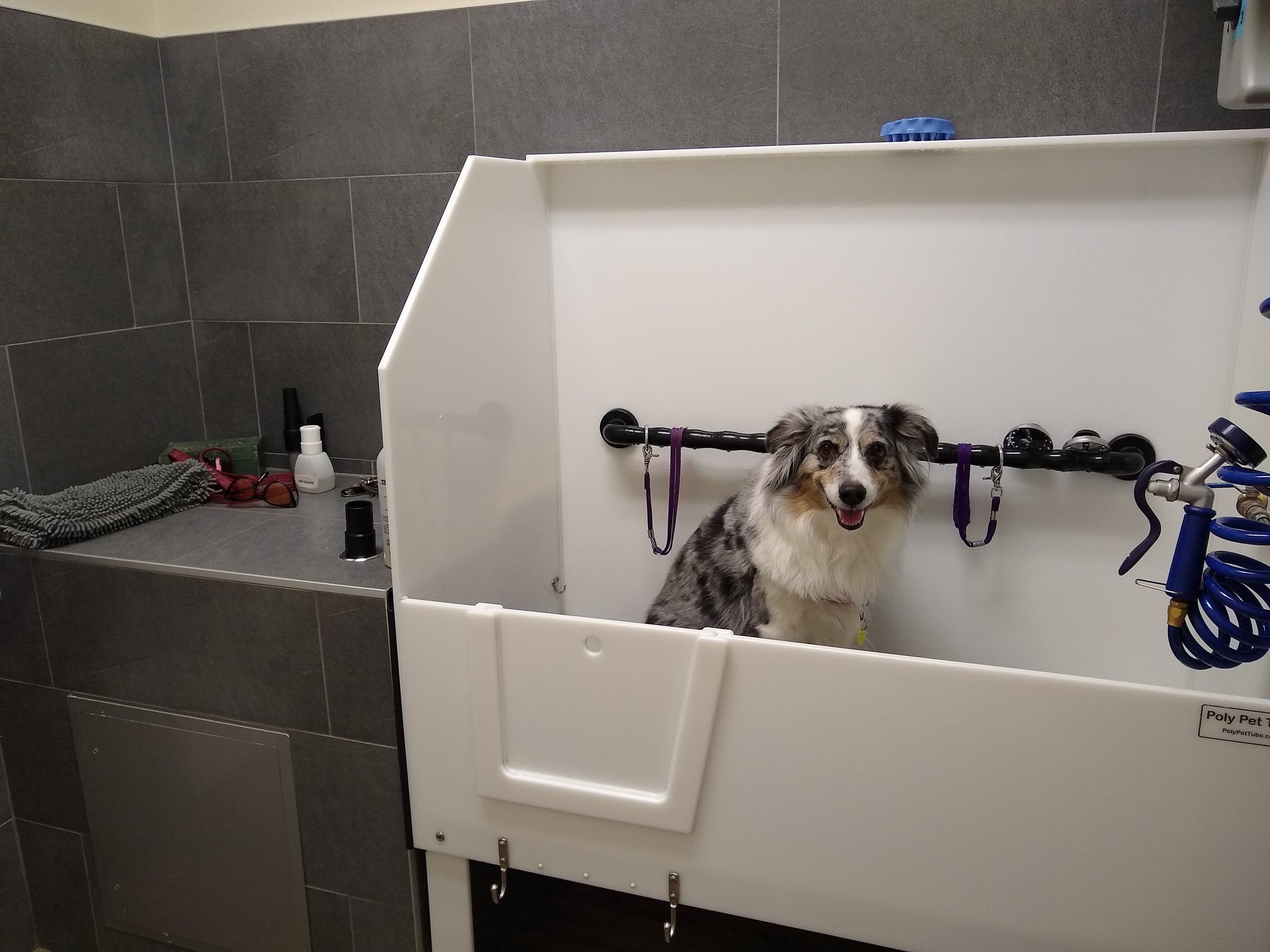
Blue Merle Australian Shepherd Dog Receiving Bath At Self Dog Wash
We bet you didn’t realize it, but bathing your beloved pup can be so much more than just a mundane chore. From our perspective, it can be an opportunity to create lasting memories and deepen the bond between you and your canine companion. The joy and excitement that come from this shared experience not only ensure your dog's cleanliness and well-being, but also provide a delightful and fulfilling experience for both of you. In this journal article; BATHING YOUR DOG CAN BE A RELAXING BONDING EXPERIENCE, we will explore the various ways that bathing your dog can be a fun and uplifting adventure, strengthening the bond and fostering a deeper connection between you and your loyal canine companion.
1.) Pre-Bath Preparation: Preparing for bath time can be an enjoyable ritual that builds anticipation and excitement for both you and your dog. If you will be bathing your dog at home, you will first Gather all the necessary bathing supplies, such as dog-friendly shampoo, towels, brushes, and treats, in advance. This preparation allows you to focus solely on the enjoyable moments that lie ahead. * Remember, Dogs Live ‘In the Moment’ so this is especially important to them. If you will be bathing your dog at a ‘Puppy Wash’ place, you will most likely be supplied with all of the essentials, like at this place shown here in the photo, however, you may wish to bring your own doggy shampoo if your pup is ‘sensitive’ and give you peace of mind knowing that they will not have an adverse reaction to a shampoo their skin isn’t used to.
2.) Setting the Stage: Create a soothing and inviting environment in your bathroom or a designated bathing area. Ensure that the water temperature is warm and comfortable for your dog. Not too col, not too hot. *Remember that a dog’s normal body temperature is between 99.5-102.5 degrees Fahrenheit. Dim the lights and play some instrumental calming music to set a tranquil atmosphere. Just like it can for us humans, utilizing these sensory enhancements can transform the bath into a ‘spa-like experience for your dog’, making them feel relaxed and cherished. We like to bring along a small bottle of Organic Essential Oil like Lavender to put a dot on our pup’s harness after her bath.
3.) Gentle Brushing: Before the bath, spend a few moments brushing your dog's coat. This not only removes loose hair and tangles but also serves as an opportunity to bond. Dogs often enjoy the sensation of being groomed, and the rhythmic strokes of the brush can create a sense of calmness and trust. As you gently brush, engage in soft conversations or comforting words, reinforcing the bond between you. * Make sure the pup’s brush is clean, both before and after you bathe them.
4.) Water Adventure: The moment arrives to introduce your dog to the water! Slowly and steadily, guide them into the bath or shower area, ensuring they feel safe and supported. Start by using a handheld showerhead on a ‘soft shower/rain’ setting, not blasting pressure. *If you’re not at the Puppy Wash and doing this at home you can use a plastic pitcher to gently wet their coat, making sure to avoid their face and ears. Observe their reactions and use calm, soothing words or treats to alleviate any anxiety. * We like to give one of our more high energy pups a little natural ‘calming treat’ about 20 minutes prior to her bath. Some items we recommend are ‘ThunderWunders Hemp Seed Calming Chews’ or ‘Dr. Bach’s Rescue Remedy for Pets’. Watching their sweet little faces, curious expressions and wagging tails as they explore this new sensation can be both amusing and heartwarming.
5.) Suds and Scrubs: Once your dog is comfortably wet, and this may take quite a bit if you have a double-coated breed such as a Collie, Husky, etc. You’re going to want to make sure have their fur and their skin wet. Now it’s time to apply the dog-friendly shampoo. *Over the years we have found that if you Start by wetting your pup’s paws first and shampooing and rinsing them, it’s not only a good way to make sure that the water temperature and pressure are correct, having clean paws and a little paw massage really helps them to relax quicker. After you wash/rinse their paws we suggest you start just behind their ears and work back towards their tail, down their sides, under their chest and belly areas. Basically, move ‘Head to Tail’ and careful not to get any shampoo in their eyes or any water in their ears.
During this entire bathing process you are going to want to use gentle, circular motions to massage the shampoo into their coat. This not only cleanses their fur but also provides a soothing and relaxing massage-like experience. When you make it fun as well as relaxing as you work through the lather, exchange playful interactions, praising and rewarding your dog with treats during or afterward for their cooperation. The shared laughter and positive reinforcement will enhance the bond between you. Dogs are here on Earth to see that we learn some important love lessons and learn how to just ‘be’ and have fun!
6.) Bonding Through Rinse: The rinsing process, while practical, can be transformed into a delightful water game. Use a handheld showerhead or a large cup to gently rinse away the suds, ensuring you don't leave any residue behind. Enjoy this playful moment as your dog dances and splashes in the water, providing laughter and smiles for both of you. Engaging in light-hearted play during the rinse creates a memorable experience that deepens your connection.
7.) Wrapping in Warmth: After the bath, wrap your dog in a soft, warm towel, and gently dry them. * Unless you have a very small pup you will most likely need to have 2-4 towels ready and or we like to use a product made from microfiber called the “Soggy Doggie” to get most of the heavy wetness off of your dog first, and then follow with towels and or a quiet, ionic shine hair dryer if they’ll allow a hair dryer, or you don’t have a warm day to allow them to air dry in the sunshine. We realize that many groomers and ‘Puppy Wash’ places do have those dryers that resemble a long black vacuum cleaner type hose, but many if not most dogs do NOT like how LOUD they are, and some animal behaviorists feel that the hose resembles a snake too much, so they don’t advocate using them based on ‘common sense’ that a dog/canine would NOT respond well to this. Be sure to pay extra attention to their paws, ears, and other sensitive areas. As you dry your dog, engage in tender words and affectionate gestures, showing them that they are loved and cherished. This post-bath ritual provides a cozy and comforting experience, reinforcing the trust and bond you share.
As you can see, Bathing your dog is more than just an essential grooming task; it is an extraordinary opportunity for shared joy, laughter, and strengthening the bond between you in a brand new activity that will need to be repeated lifelong.
Dogs are not on this planet very long in comparison to human beings, so any experience that you can share with them and make it a positive fun one makes all the difference in their world.

DO DOGS LIKE IT WHEN WE TALK IN HIGHER PITCHED ‘BABY TALK’ TO THEM?
BABY TALK
DOG DIRECTED SPEECH
HUMAN TODDLER WITH SENIOR GOLDEN RETRIEVER
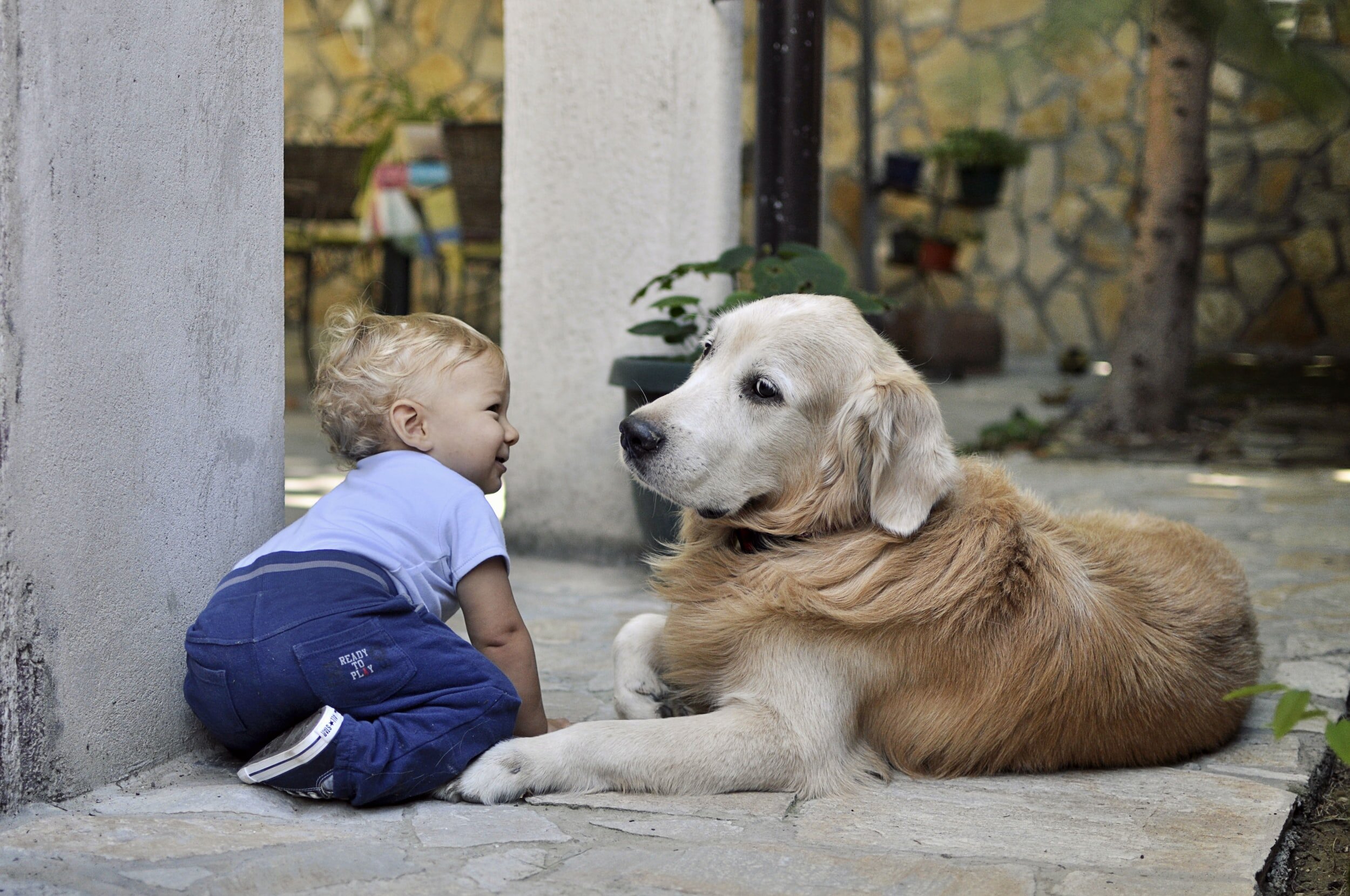
The answer is Yes, dogs do seem to respond positively to "baby talk" or a higher-pitched voice when we speak to them. Studies have shown that dogs are more likely to engage with and pay attention to their owners when they use a higher-pitched voice, similar to the way we might speak to a young child or baby. This type of speech, known as dog-directed speech, seems to be more effective at getting a dog's attention than regular speech.
There have been several studies conducted on the subject of dog-directed speech and its effects on dogs.
In one study published in the Journal Animal Cognition in 2018, researchers recorded women speaking in both dog-directed and adult-directed speech while looking at pictures of dogs. The study found that dogs were more likely to approach the speaker when she used dog-directed speech, compared to adult-directed speech. The dogs also showed more interest in the speaker and in the pictures of dogs when she used dog-directed speech.
Another study published in the journal Proceedings of the Royal Society B in 2016 looked at the way dogs responded to different types of speech. The researchers found that dogs were more likely to turn their heads and look at the speaker when she used high-pitched, dog-directed speech, compared to lower-pitched, adult-directed speech. The study also found that dogs were more likely to approach the speaker when she used dog-directed speech.
A third study published in the journal PLOS ONE in 2017 found that dogs showed more positive behaviors, such as tail wagging and body language indicating excitement, when their owners used dog-directed speech compared to normal speech.
Overall, these studies suggest that dogs do respond positively to dog-directed speech, and that using a higher-pitched, more exaggerated tone when speaking to dogs can help get their attention and engage them. However, it's important to remember that dogs rely on a variety of communication cues, not just speech, and that every dog is different. So while dog-directed speech can be helpful, it's also important to pay attention to your dog's body language and respond accordingly and ‘higher pitched’ ‘baby talk’ is great to ‘get the dog’s attention’, but not necessarily recommended to ONLY use this ‘tone’ of voice all of the time when communicating with them.
While dogs do respond positively to higher-pitched, baby talk-like tones of voice, it's important to *remember that dogs also respond to other tones of voice and communication cues.
For example, dogs may respond more to a calm and soothing tone of voice when they are anxious or scared, or a firm and assertive tone of voice when they need to be corrected for misbehavior, very similarly to how a human toddler might respond. In fact, using the same tone of voice for everything you say to your dog can actually be confusing for them and make it more difficult for them to understand what you want from them and in what context.
So, while using a higher-pitched tone of voice can be effective in getting your dog's attention and engaging with them, it's also important to vary your tone of voice based on the situation and your dog's behavior. As previously mentioned- Pay attention to your dog's body language and adjust your tone accordingly to help them understand what you want from them.

DHA BRAIN RICH FOODS FOR YOUR PUPPY/DOG
DHA BRAIN RICH FOODS FOR YOUR PUPPY-DOG
AUSTRALIAN SHEPHERD WEARING READING GLASSES

Including DHA-rich foods in your puppy's diet can be beneficial for their cognitive development. DHA, short for docosahexaenoic acid, is an omega-3 fatty acid that plays a crucial role in brain development and function. They might not be brainiac breed like an Australian Shepherd aka Aussie, but they will definitely benefit from having DHA rich foods included in their nutrition program.
Here are some of the best DHA-rich foods for your puppy or dog:

Fish: Fatty fish like salmon, mackerel, and sardines are excellent sources of DHA. They provide high levels of omega-3 fatty acids, including DHA, which can support brain development and cognitive function.
Fish Oil: Fish oil supplements can be added to your puppy's diet to ensure an adequate intake of DHA. Look for high-quality fish oil specifically formulated for dogs and don’t skimp on this.
Algae: Certain types of algae, such as spirulina and broken cell wall chlorella, contain DHA and can be beneficial for your puppy's brain development. These are often available in powdered or supplement form. Our pups have all liked both spirulina and chlorella from Compassion Circle in tablet form and their Green Mush products as well.
Eggs: Egg yolks are a good source of DHA. However, it's important to note that dogs should not consume raw eggs due to the risk of Salmonella. Cooked eggs, without any seasoning or additives, can be a healthy addition to your puppy's diet.
Fortified Foods: Some , but honestly very few commercial dog foods are fortified with DHA to provide essential nutrients for brain development. If you are goin to choose to feed your puppy/dog any type of processed kibble, then you need to look for high-quality super premium brands of puppy food that specifically mentions DHA content. Check out The Dog Food Advisor for super premium brands and for any Recalls of foods/treats.
These DHA-rich foods are important for cognitive brain development because DHA is a key structural component of the brain. Any mammalian brain. It helps promote the growth and maturation of neurons, supports neurotransmitter function, and enhances communication between brain cells. Adequate levels of DHA can contribute to improved learning abilities, memory retention, and overall brain health in puppies and dogs.
Always consult with your veterinarian or canine nutritionist to determine the appropriate amount of DHA and the best diet for your specific puppy or dog. They can provide tailored recommendations based on your pet's age, breed, size, and individual needs.
Personally, we like adding in a bit of Nori Seaweed and or Wild Caught Sardines to our puppy/dog’s nutrition and this is why:
Nori seaweed and wild-caught sardines can indeed be beneficial for dogs' brain health due to their DHA content.
Nori Seaweed: Nori seaweed is a type of algae commonly used in sushi rolls. While it is not as high in DHA as some other sources like fish or fish oil, it still contains moderate levels of this omega-3 fatty acid. Feeding small amounts of nori seaweed to your dog can contribute to their overall DHA intake.
Wild Caught Sardines: Sardines are an excellent source of DHA for dogs. They are small, oily fish that are often consumed whole, including their bones and skin, which are rich in essential fatty acids. Opting for wild-caught sardines ensures that your dog receives high-quality fish with minimal contaminants. It's important to note that you should remove any small bones before feeding them to your dog to avoid potential choking hazards. We like both the Wild Caught Sardines from Trader Joe’s and the Sustainably caught sardines from Crown Prince.
Both nori seaweed and wild-caught sardines can be included in your dog's diet as part of a balanced and varied approach to nutrition. They both offer additional nutrients besides DHA, such as protein and other essential minerals, which contribute to overall health and well-being, plus they are both VERY economical choices. We also like the fact that both of them are convenient and easy to take with us on short day trips or travel. Nori comes in a package of ‘sheets’ you can easily tear off and of course sardines are available in either the little pop top flat cans or in small glass jars. Our pups LOVE both Nori and sardines.