

Our journal is a collection of 50+ years of experiences and wisdom from our community. We welcome positive, insightful feedback, input and if you want to become a Guest Goddess to write your own post please visit the link in the menu.
CATEGORIES
- ADVOCACY
- AMERICA'S FAVORITE PET
- ANIMAL WELFARE
- ANIMALS
- ANXIETY
- BEHAVIOR
- COMMUNITY
- CONTEST
- Collaborative Living
- Community & Reciprocity
- Consciousness & Collective Evolution
- DOG BREEDS
- DOGS
- EVENTS
- Embodiment & Awareness
- FIELD NOTES
- HEALTH AND WELLNESS
- HOLIDAYS
- Human + Animal Connection
- Human Ecology
- Interconnectedness
- LIFESTYLE
- MODERN DOG
- NUTRITION
- Nervous System & Modern Life
- Purpose-Driven Living
- RECIPES
- SERVICE DOG
- SOMATIC
- SPIRITUALITY
- Spirituality in Everyday Reality
- TRAINING
- The Dog Goddess Journal
- Transition & Transformation
- WILDLIFE AND CONSERVATION
- WOLVES
CONTENT
- ADAPTOGENS
- ADOPT DON'T SHOP
- ADVOCACY
- ALIGNED COMMUNITY
- AMERICA'S FAVORITE PET
- AMERICAN ESKIMO DOG
- ANCESTORS
- ANIMAL COMMUNICATION
- ANIMAL RESCUE
- ANIMAL WELFARE
- ANIMALS
- ANXIETY
- AUSTRALIAN SHEPHERD DOG
- AUTHENTIC LIVING
- BEHAVIOUR
- BEST FRIEND
- BONDING
- BREEDS OF DOGS
- CAMPING
- CANINE
- CANINE ANATOMY
- CANINE COMMUNICATION
- CANINE CPR
- CANINE DNA
- CANINE FIRST AID
- CANINE HEALTH
- CANINE HEALTH TESTS
- CANINE NERVOUS SYSTEM
- CANINE NUTRITION
- CHAKRAS
- COLLABORATION
- COLLARS
- COLLECTIVE CONSCIOUSNESS
- COMMUNICATION
- COMMUNITY
- COMPASSION
- CONSCIOUS COMMUNITY
- CONSCIOUS LIVING
- CONSERVATION
- CONTEST
- COYOTES
- CRATE TRAINING
- CULTURES
- DISABLED COMMUNITY
- DOG AGE
- DOG BREEDS
- DOG SITTING
- DOG TREATS
- DOG WALKING
- DOG WHISPERER

Nervous Systems, Dogs, and What People Often Misunderstand About “Overreaction”
Nervous Systems, Dogs, And What People Often Misunderstand About “Overreaction”

Dog Nervous System
There is a pattern that shows up again and again in both humans and animals, especially in highly sensitive nervous systems.
From the outside, it is often labeled as “overreaction,” “bad behavior,” or “lack of control.”
But what is actually happening is something much more precise:
A nervous system moving beyond its capacity to regulate in real time.
This is not rare. It is not limited to one species. It is not even limited to trauma history or training gaps.
It is simply biology under load.
And it becomes especially visible in dogs when they are placed in unfamiliar, stimulating, or emotionally charged environments. This is also why humans ‘on the outside looking in’ so to speak, should not be judging dogs or their human handlers. Especially when they are not your dog. Even a highly trained Service Dog is not a robot or a statue. It is still very challenging for them to ignore so much stimuli in the environment, and new environments in particular.
What people see vs. what is actually happening
What is typically observed:
barking
whining
pulling
pacing
heightened excitement that tips into distress
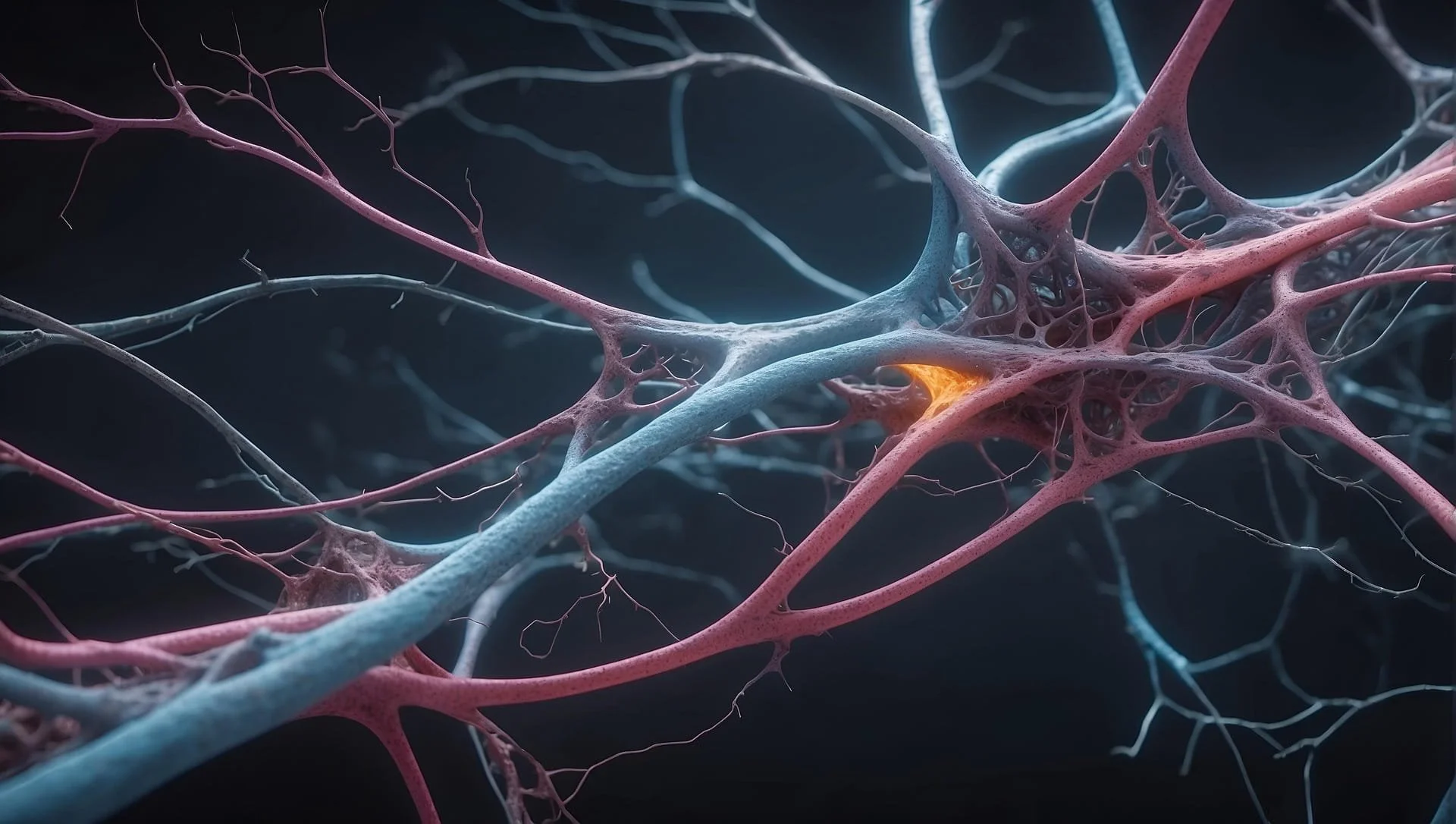
What is actually happening internally:
sensory overload
anticipation without resolution
unfamiliar environment processing
nervous system activation rising faster than it can discharge
loss of regulatory balance under stimulation
The behavior is not the problem.
The behavior is the communication.
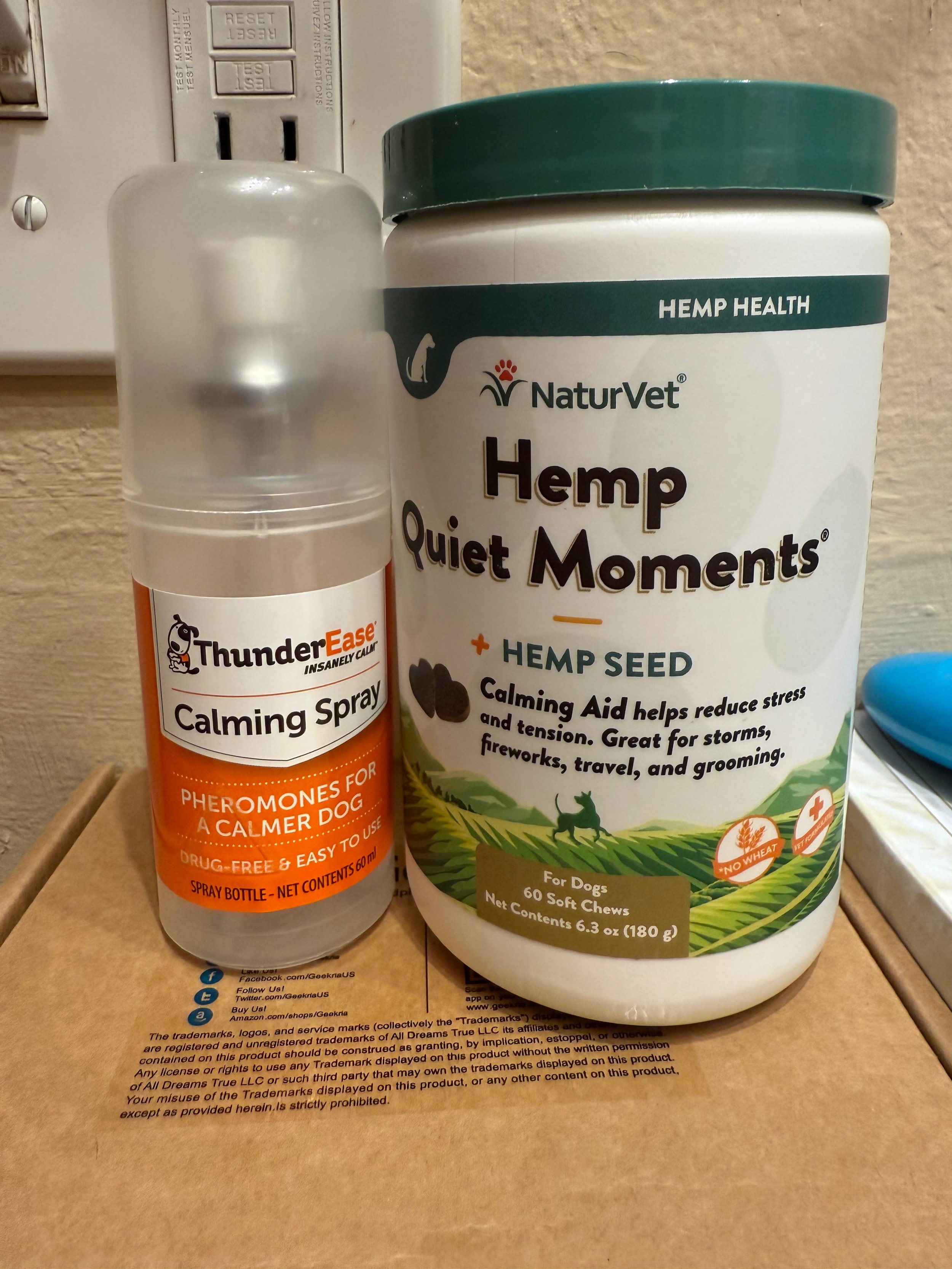
Calming Aids
Why calming tools sometimes appear to “not work”
One of the most misunderstood aspects of nervous system regulation is timing.
Calming supports—whether herbal, behavioral, environmental, or training-based—do not override a system already in full activation.
They support regulation only when the nervous system is still within a receptive range.
When a system is already highly activated:
adrenaline is elevated
dopamine and stress chemistry fluctuate rapidly
sensory input becomes amplified
cognitive processing narrows
In that state, even appropriate calming supports may appear ineffective or delayed.
Not because they are wrong—but because the system has already passed the threshold where input can be smoothly integrated.
Regulation still happens—but often after the peak, not during it.
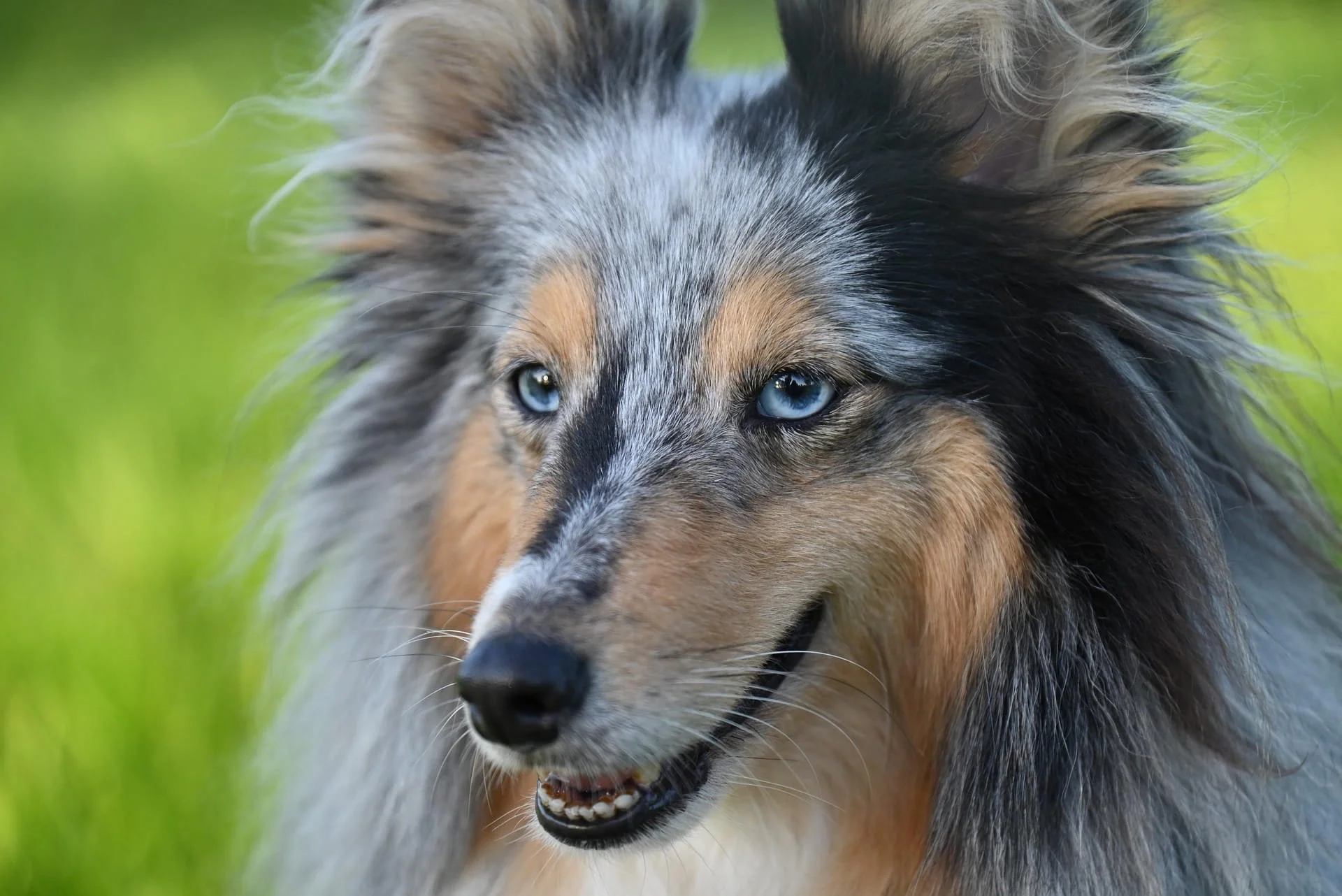
The layer most people don’t see: interpretation
In shared environments—apartment tours, public spaces, hotels—there is another layer that compounds the challenge:
Human interpretation.
Most people are not observing nervous system states. They are observing behavior.
And behavior is quickly labeled as:
“poor training”
“disobedience”
“lack of control”
“incompatibility with expectations”
Very few people are trained to recognize:
transition stress
overstimulation cycles
separation distress
or nervous system overwhelm in real time
So in many instances, the animal is judged without context for what is actually happening internally. * Put your self in the other’s place is very apropos here.
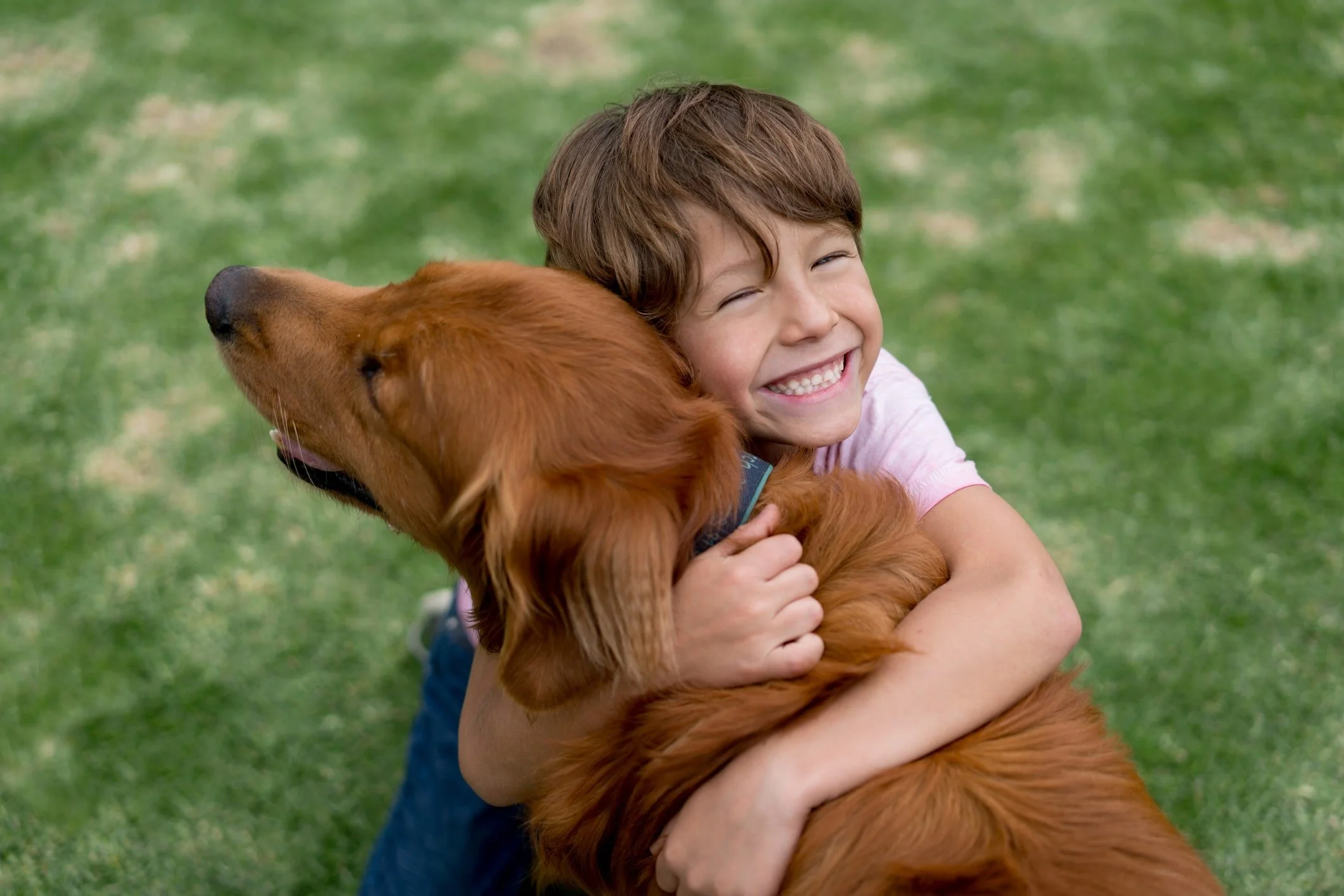
The pattern is not limited to dogs
These same nervous system dynamics can appear in humans as well.
In children and adults who are highly sensitive or neurodivergent, you often see:
rapid escalation under stimulation
difficulty down-regulating in the moment
delayed recovery after high input environments
strong emotional or physical “crash” after the event
The expression differs—but the underlying mechanism is often similar:
A system that escalates faster than it can regulate under environmental load.
What actually helps (practically, not theoretically)
Over time, the most effective approach is not trying to suppress behavior in the moment.
It is ‘shaping the conditions’ around the nervous system:
reduce stimulation before exposure
allow decompression after transitions
keep initial exposure periods short
build consistent routines for entry and exit
recognize threshold points early, before overload occurs
This shifts the focus from:
“How do we stop this behavior?”
to:
“How do we prevent the system from exceeding its capacity in the first place?”
A different way of seeing it
When behavior is no longer interpreted as failure, something important changes.
We begin to see it more accurately as:
a nervous system communicating its current capacity in real time.
Whether human or animal, the principle remains the same:
Behavior is not character.
Behavior is communication.
And regulation is always possible—but it is deeply dependent on timing, environment, and load.
Closing reflection
The more we understand nervous systems—ours and those of the animals we live with—the less we blame behavior, and the more we learn to listen to what is actually being expressed.
Because underneath every “reaction” is a system simply trying to find balance again.
A Series continuation: Part 2- “How To Support A Sensitive Or Reactive Dog”-